
Trucking Insurance Requirements in 2026: What You Need Guide
What Insurance does a Trucking Company Need
Trucking Insurance Requirements – insurance does trucking is central to this topic in 2026. what-insurance-does-a-trucking-company-need is a high-intent insurance question because trucking companies carry large liability, vehicle, driver, cargo, contract, and regulatory exposures. A trucking company usually needs more than a general business policy. It may need primary auto liability, physical damage, motor truck cargo, general liability, workers’ compensation, umbrella liability, trailer interchange, non-trucking liability, and other coverage depending on operations.
The right insurance structure depends on the type of trucking company. A local box truck operator, owner-operator, long-haul motor carrier, refrigerated carrier, flatbed operation, dump truck business, hotshot trucking business, and freight company with multiple drivers can all need different coverage. The goal is to protect the company from accidents, damaged freight, driver injuries, equipment losses, and contract disputes while satisfying legal and customer requirements.
Trucking Insurance Requirements: insurance does trucking: Direct Answer
The direct answer for what-insurance-does-a-trucking-company-need is that the owner should evaluate insurance as a complete risk-transfer program, not as a single form or one-line price. A trucking company faces fleet, driver, cargo, liability, contract, and regulatory exposure, so the correct answer depends on operations, location, employees, contracts, vehicles, property values, annual revenue, and the limits required by partners or regulators.
For a trucking company, the phrase what-insurance-does-a-trucking-company-need usually appears when an owner is close to buying, renewing, comparing quotes, signing a lease, onboarding with a customer, or applying for a permit. That timing matters because a rushed policy purchase can create weak protection. A careful purchase starts with accurate business details, then matches those details to the right coverage forms.
This guide treats what-insurance-does-a-trucking-company-need as a practical buying decision. It explains what the topic means, why the exposure is unique, which owners usually need the coverage, what affects cost, how to compare quotes, which mistakes to avoid, and how to build a stronger insurance file before a contract or claim forces the issue.
What It Means
In practical insurance language, this topic is about commercial auto liability, cargo protection, physical damage, drivers, contracts, and operating authority. The words in what-insurance-does-a-trucking-company-need may sound narrow, but the real decision is broader because insurance policies interact with daily operations, legal obligations, and contract language.
A trucking company owner should read every quote as a set of promises and limitations. The declarations page shows the obvious details, but exclusions, endorsements, definitions, conditions, deductibles, rating basis, and additional insured wording often determine whether the policy is actually useful.
The owner should also separate three ideas: coverage required by law, coverage required by contract, and coverage that is not required but may be financially essential. Those categories overlap, but they are not identical. A lease may require one set of limits, a lender may require property protection, and the actual operational exposure may call for additional policies.
Unique Insurance Exposure
A trucking company creates unusually layered risk because the operation is public-facing, physical, and dependent on equipment, people, timing, suppliers, and customer trust. A single incident can involve bodily injury, damaged property, lost revenue, employee injury, product allegations, vehicle liability, and reputational harm.
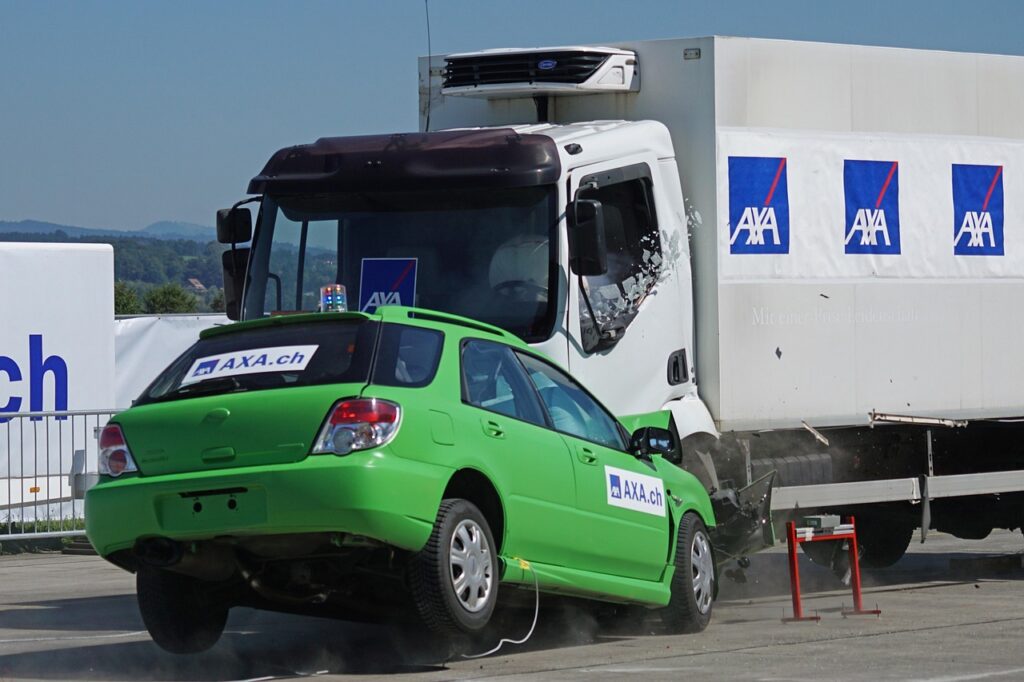
Common risk examples include a tractor-trailer collision, damaged freight, driver injury, warehouse loading accident, missed contract requirement, theft of cargo, and equipment downtime. These are not abstract problems. They are exactly the kinds of events that create urgent phone calls, interrupted revenue, legal letters, contract disputes, and unexpected cash demands.
That is why what-insurance-does-a-trucking-company-need should not be treated as a commodity search. Two businesses with similar names can need different insurance if one has employees, one delivers, one owns expensive equipment, one signs strict contracts, or one operates in a state with different requirements.
Who Usually Needs It
New owners need to understand what-insurance-does-a-trucking-company-need before opening because insurance may be required before a lease, permit, event, wholesale account, or customer contract becomes active.
Growing owners need to revisit coverage when revenue increases, staff is hired, vehicles are added, delivery begins, equipment values rise, new locations open, or the business expands into events, wholesale, catering, or multi-state work.
Established owners need annual reviews because old limits may no longer match the current business. A policy purchased when the trucking company was small may be inadequate after hiring employees, adding higher-value equipment, or accepting larger commercial contracts.
What Affects Cost
Cost is affected by state, city, annual sales, payroll, number of employees, claims history, years in business, coverage limits, deductibles, property values, vehicles, driving radius, contracts, safety controls, and the specific products or services offered.
Underwriters also consider operational intensity. A low-volume owner-operated business with clean claims history may look different from a larger operation with employees, delivery routes, expensive equipment, frequent events, late hours, or strict contract requirements.
Owners comparing what-insurance-does-a-trucking-company-need should ask each provider what assumptions were used to build the quote. If one quote assumes no delivery, no employees, or a lower revenue level, it is not comparable to a quote that accurately reflects the business.
Common Decisions
The first decision is which policies belong in the program. For this type of business, owners commonly review primary auto liability, physical damage, motor truck cargo, general liability, workers’ compensation, umbrella liability, trailer interchange, non-trucking liability, bobtail coverage, and employment practices liability. Not every business needs every policy, but the list helps reveal the exposures that should be discussed.
The second decision is limit selection. Low limits may satisfy a tight budget, but contracts may require higher limits, and a serious claim can exceed minimum protection quickly. Owners should compare the cost of higher limits with the financial impact of being underinsured.
The third decision is whether to prioritize a package policy, separate policies, or a specialized carrier. Packages can be efficient, but only if the forms fit the actual operation. Separate policies can offer precision, but they require careful coordination.
- Confirm that the named insured matches the legal entity that signs contracts.
- Ask whether the policy covers the work exactly as the business performs it.
- Review exclusions before accepting the lowest premium.
- Keep a copy of all certificates, endorsements, and contract requirements.
- Revisit limits after revenue, payroll, vehicles, or property values change.
Buyer Mistakes
One common mistake is choosing the lowest premium before reviewing exclusions. A cheap policy can be expensive if it excludes the operation that creates the claim.
Another mistake is failing to disclose important facts. If the business uses vehicles, hires employees, stores goods off-site, operates at events, sells wholesale, or signs contracts with special insurance wording, those facts should be part of the quote conversation.
A third mistake is waiting until the last minute to request a certificate. Many contracts require specific wording, additional insured status, waiver of subrogation, or primary and noncontributory language. Not every policy can provide every wording request.
How To Compare Quotes
To compare quotes for what-insurance-does-a-trucking-company-need, give each agent or carrier the same information. Use the same projected revenue, payroll, location details, vehicle information, equipment values, services, contracts, and requested limits.
Then compare the policy details rather than only the premium. Important points include limits, deductibles, exclusions, endorsements, audit rules, cancellation terms, carrier strength, claims process, certificate turnaround, and whether the named insured is correct.
A quote that looks higher may provide broader protection. A quote that looks cheaper may be missing product liability, off-premises property, hired and non-owned auto, employee coverage, cargo, business interruption, or the certificate wording needed to win business.
- Confirm that the named insured matches the legal entity that signs contracts.
- Ask whether the policy covers the work exactly as the business performs it.
- Review exclusions before accepting the lowest premium.
- Keep a copy of all certificates, endorsements, and contract requirements.
- Revisit limits after revenue, payroll, vehicles, or property values change.
Related Policies
Related policies should be reviewed together because claims rarely respect neat category lines. A vehicle incident may involve auto liability, property damage, cargo or goods, employee injury, and contract obligations.
For a trucking company, the adjacent coverages often include primary auto liability, physical damage, motor truck cargo, general liability, workers’ compensation, umbrella liability, trailer interchange, non-trucking liability, bobtail coverage, and employment practices liability. These policies protect different parts of the business and should be coordinated so that one gap does not undermine the rest of the program.
Owners should also ask whether umbrella liability is appropriate. An umbrella may provide additional limits above certain underlying policies, which can be useful when contracts require higher limits or when the business has meaningful public exposure.
State And Contract Variation
Insurance requirements vary by state, city, lease, lender, platform, customer, venue, and operating agreement. That means what-insurance-does-a-trucking-company-need cannot be answered with one universal checklist for every owner.
Workers’ compensation thresholds, commercial auto rules, certificate wording, liability limits, permit requirements, and additional insured expectations can differ dramatically. A business that operates in more than one jurisdiction should review requirements before expanding.
Contract variation is just as important as legal variation. One landlord may ask for standard liability limits, while a large customer may require higher limits, additional insured status, waiver of subrogation, and proof of auto or workers’ compensation coverage.
Practical Scenarios
Scenario one: a customer or third party alleges injury connected to the business. General liability or product-related coverage may become important, depending on the facts.
Scenario two: an employee is injured while working. Workers’ compensation may be required by state law and may help cover medical costs and lost wages.
Scenario three: a vehicle is involved in a business-related accident. Commercial auto or hired and non-owned auto may determine whether the business has proper protection.
Scenario four: equipment fails, property is damaged, or operations stop. Property, equipment breakdown, spoilage, or business interruption coverage may be reviewed.
Scenario five: a contract requires proof of insurance before work can begin. Certificate capability can become a revenue issue, because no certificate may mean no job, no lease approval, or no event access.
Buying Checklist
Prepare the legal business name, DBA, entity type, owner information, addresses, website, services, operating area, and contact details before requesting quotes.
List annual revenue, payroll, number of employees, subcontractors, vehicles, equipment values, inventory values, locations, storage arrangements, and major contracts.
Collect leases, customer contracts, event requirements, lender agreements, vendor requirements, and certificate instructions so that the agent can match policy wording to real obligations.
Ask about limits, deductibles, exclusions, endorsements, policy audits, payment plans, cancellation terms, claims reporting, and certificate turnaround.
Save the final policy, binder, invoices, certificates, endorsements, and claims instructions in a shared folder so the business can respond quickly when proof or documents are needed.
- Confirm that the named insured matches the legal entity that signs contracts.
- Ask whether the policy covers the work exactly as the business performs it.
- Review exclusions before accepting the lowest premium.
- Keep a copy of all certificates, endorsements, and contract requirements.
- Revisit limits after revenue, payroll, vehicles, or property values change.
Operational Habits
Good operations support better insurance outcomes. Maintain written safety procedures, employee training records, cleaning logs, driver screening, maintenance receipts, incident reports, and equipment service documentation.
Communicate changes before they happen. Adding delivery, hiring staff, buying a vehicle, expanding hours, signing a major contract, purchasing high-value equipment, or entering a new state can change the insurance picture.
Review what-insurance-does-a-trucking-company-need annually and before major growth decisions. Insurance is not a one-time purchase; it is a risk management tool that should grow with the business.
- Confirm that the named insured matches the legal entity that signs contracts.
- Ask whether the policy covers the work exactly as the business performs it.
- Review exclusions before accepting the lowest premium.
- Keep a copy of all certificates, endorsements, and contract requirements.
- Revisit limits after revenue, payroll, vehicles, or property values change.
Final Takeaway
The strongest approach to what-insurance-does-a-trucking-company-need is to connect the keyword to real business activity. The owner should not buy insurance just to check a box; the policy should support continuity, contract access, cash flow protection, and better decision-making.
A careful owner compares coverage quality, not just price. The best policy is the one that matches operations, satisfies obligations, avoids obvious gaps, and gives the business a practical path forward when a claim, contract request, or inspection appears.
Before buying, owners should document operations, gather requirements, request comparable quotes, review exclusions, confirm certificate wording, and keep records organized. That process makes insurance more useful and makes the business easier to operate with confidence.
Key Aspects of Trucking Insurance Requirements
Underwriters price and approve coverage based on the facts presented to them. Owners should prepare accurate revenue, payroll, vehicle, equipment, location, and service details before requesting quotes. For owners researching what-insurance-does-a-trucking-company-need, this step turns insurance from a last-minute purchase into a management tool. It also helps the owner compare providers more fairly because each quote can be measured against the same facts and expectations.
A disciplined insurance process is especially important for a trucking company because the business depends on continuity. When equipment, vehicles, employees, products, contracts, or customer trust are interrupted, the financial impact can move quickly. Insurance does not replace good operations, but it can help the owner recover from losses that would otherwise put pressure on cash flow.
Limit Selection
Limits should be selected with contracts and real loss potential in mind. Minimum limits may not satisfy landlords, lenders, venues, platforms, or larger customers. For owners researching what-insurance-does-a-trucking-company-need, this step turns insurance from a last-minute purchase into a management tool. It also helps the owner compare providers more fairly because each quote can be measured against the same facts and expectations.
A disciplined insurance process is especially important for a trucking company because the business depends on continuity. When equipment, vehicles, employees, products, contracts, or customer trust are interrupted, the financial impact can move quickly. Insurance does not replace good operations, but it can help the owner recover from losses that would otherwise put pressure on cash flow.
Deductible Strategy
A deductible should fit the business cash reserve. A higher deductible can reduce premium, but it should not create stress when a claim occurs. For owners researching what-insurance-does-a-trucking-company-need, this step turns insurance from a last-minute purchase into a management tool. It also helps the owner compare providers more fairly because each quote can be measured against the same facts and expectations.
A disciplined insurance process is especially important for a trucking company because the business depends on continuity. When equipment, vehicles, employees, products, contracts, or customer trust are interrupted, the financial impact can move quickly. Insurance does not replace good operations, but it can help the owner recover from losses that would otherwise put pressure on cash flow.
Certificate Planning
Certificate requests should be reviewed before deadlines. Additional insured wording, waiver of subrogation, and primary and noncontributory wording may require policy endorsements. For owners researching what-insurance-does-a-trucking-company-need, this step turns insurance from a last-minute purchase into a management tool. It also helps the owner compare providers more fairly because each quote can be measured against the same facts and expectations.
A disciplined insurance process is especially important for a trucking company because the business depends on continuity. When equipment, vehicles, employees, products, contracts, or customer trust are interrupted, the financial impact can move quickly. Insurance does not replace good operations, but it can help the owner recover from losses that would otherwise put pressure on cash flow.
Claims Readiness
Owners should know how to report a claim before a claim occurs. Incident documentation, photos, witness details, maintenance records, and employee notes can help the process. For owners researching what-insurance-does-a-trucking-company-need, this step turns insurance from a last-minute purchase into a management tool. It also helps the owner compare providers more fairly because each quote can be measured against the same facts and expectations.
A disciplined insurance process is especially important for a trucking company because the business depends on continuity. When equipment, vehicles, employees, products, contracts, or customer trust are interrupted, the financial impact can move quickly. Insurance does not replace good operations, but it can help the owner recover from losses that would otherwise put pressure on cash flow.
Renewal Review
Renewal is the best time to update the policy for new equipment, larger payroll, higher revenue, added delivery, new contracts, or changed operations. For owners researching what-insurance-does-a-trucking-company-need, this step turns insurance from a last-minute purchase into a management tool. It also helps the owner compare providers more fairly because each quote can be measured against the same facts and expectations.
A disciplined insurance process is especially important for a trucking company because the business depends on continuity. When equipment, vehicles, employees, products, contracts, or customer trust are interrupted, the financial impact can move quickly. Insurance does not replace good operations, but it can help the owner recover from losses that would otherwise put pressure on cash flow.
Growth Planning
Insurance should be reviewed before expansion. A new location, vehicle, product line, driver, employee group, or contract can create new exposure. For owners researching what-insurance-does-a-trucking-company-need, this step turns insurance from a last-minute purchase into a management tool. It also helps the owner compare providers more fairly because each quote can be measured against the same facts and expectations.
A disciplined insurance process is especially important for a trucking company because the business depends on continuity. When equipment, vehicles, employees, products, contracts, or customer trust are interrupted, the financial impact can move quickly. Insurance does not replace good operations, but it can help the owner recover from losses that would otherwise put pressure on cash flow.
Risk Management Culture
Better safety habits can support better insurance outcomes over time. Training, inspections, maintenance, cleaning logs, driver controls, and written procedures all matter. For owners researching what-insurance-does-a-trucking-company-need, this step turns insurance from a last-minute purchase into a management tool. It also helps the owner compare providers more fairly because each quote can be measured against the same facts and expectations.
A disciplined insurance process is especially important for a trucking company because the business depends on continuity. When equipment, vehicles, employees, products, contracts, or customer trust are interrupted, the financial impact can move quickly. Insurance does not replace good operations, but it can help the owner recover from losses that would otherwise put pressure on cash flow.
Another important point for what-insurance-does-a-trucking-company-need is that policy fit should be reviewed before a change is made, not after. Owners should contact their insurance professional before adding a vehicle, hiring employees, signing a larger customer, buying expensive equipment, launching delivery, or entering a new market. That habit helps avoid the common problem of discovering a gap only after a claim or certificate request appears.
Documentation is also part of a strong insurance strategy. Save inspection records, employee training notes, equipment service receipts, vehicle maintenance logs, cleaning procedures, contracts, certificates, endorsements, and claims correspondence. These records can support better claims handling and make renewal discussions more accurate.
For a trucking company, the most useful insurance program is one that fits the real operating model. A policy that sounds correct but does not match actual revenue, locations, services, vehicles, employees, or contracts can create unnecessary risk. A careful review of what-insurance-does-a-trucking-company-need should always include both the business details and the policy wording.
Another important point for what-insurance-does-a-trucking-company-need is that policy fit should be reviewed before a change is made, not after. Owners should contact their insurance professional before adding a vehicle, hiring employees, signing a larger customer, buying expensive equipment, launching delivery, or entering a new market. That habit helps avoid the common problem of discovering a gap only after a claim or certificate request appears.
Documentation is also part of a strong insurance strategy. Save inspection records, employee training notes, equipment service receipts, vehicle maintenance logs, cleaning procedures, contracts, certificates, endorsements, and claims correspondence. These records can support better claims handling and make renewal discussions more accurate.
For a trucking company, the most useful insurance program is one that fits the real operating model. A policy that sounds correct but does not match actual revenue, locations, services, vehicles, employees, or contracts can create unnecessary risk. A careful review of what-insurance-does-a-trucking-company-need should always include both the business details and the policy wording.
Another important point for what-insurance-does-a-trucking-company-need is that policy fit should be reviewed before a change is made, not after. Owners should contact their insurance professional before adding a vehicle, hiring employees, signing a larger customer, buying expensive equipment, launching delivery, or entering a new market. That habit helps avoid the common problem of discovering a gap only after a claim or certificate request appears.
Documentation is also part of a strong insurance strategy. Save inspection records, employee training notes, equipment service receipts, vehicle maintenance logs, cleaning procedures, contracts, certificates, endorsements, and claims correspondence. These records can support better claims handling and make renewal discussions more accurate.
For a trucking company, the most useful insurance program is one that fits the real operating model. A policy that sounds correct but does not match actual revenue, locations, services, vehicles, employees, or contracts can create unnecessary risk. A careful review of what-insurance-does-a-trucking-company-need should always include both the business details and the policy wording.
Another important point for what-insurance-does-a-trucking-company-need is that policy fit should be reviewed before a change is made, not after. Owners should contact their insurance professional before adding a vehicle, hiring employees, signing a larger customer, buying expensive equipment, launching delivery, or entering a new market. That habit helps avoid the common problem of discovering a gap only after a claim or certificate request appears.
Documentation is also part of a strong insurance strategy. Save inspection records, employee training notes, equipment service receipts, vehicle maintenance logs, cleaning procedures, contracts, certificates, endorsements, and claims correspondence. These records can support better claims handling and make renewal discussions more accurate.
For a trucking company, the most useful insurance program is one that fits the real operating model. A policy that sounds correct but does not match actual revenue, locations, services, vehicles, employees, or contracts can create unnecessary risk. A careful review of what-insurance-does-a-trucking-company-need should always include both the business details and the policy wording.
Focus keyword context: Trucking Insurance Requirements
Focus keyword context: Trucking Insurance Requirements
Focus keyword context: Trucking Insurance Requirements
Focus keyword context: Trucking Insurance Requirements
Focus keyword context: Trucking Insurance Requirements
Focus keyword context: Trucking Insurance Requirements
Focus keyword context: Trucking Insurance Requirements